


A Vast Nation Bridging Continents and Centuries
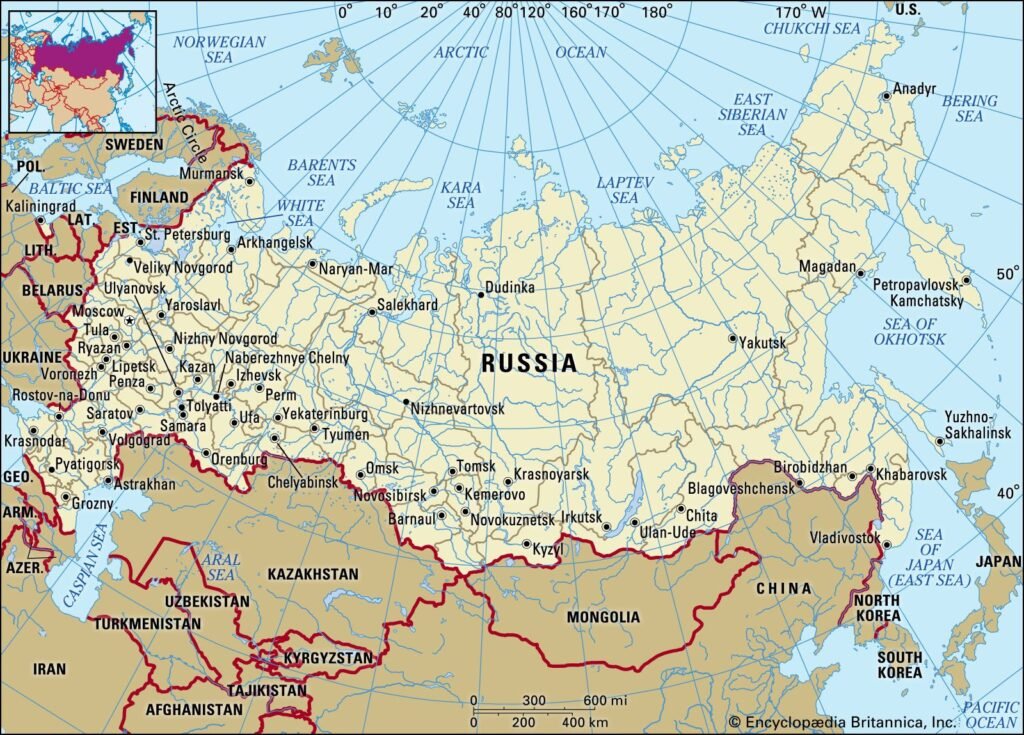
Russia stands as the world’s largest country, spanning over 17 million square kilometers across eleven time zones, stretching from Eastern Europe to the Pacific Ocean. This immense territory, home to approximately 144 million people, has shaped one of history’s most influential civilizations, leaving an indelible mark on global politics, culture, and human achievement.
Geographic Expanse and Population
Russia’s vast landmass covers more than one-eighth of Earth’s inhabited land area, encompassing diverse landscapes from Arctic tundra to subtropical beaches, from the steppes of Central Asia to the forests of Siberia. Despite this enormity, Russia’s population density remains relatively low, with most citizens concentrated in the European portion west of the Ural Mountains. Moscow, the capital and largest city with over 12 million residents, serves as the political, economic, and cultural heart of the nation. Saint Petersburg, the historic imperial capital, remains the country’s cultural jewel and second-largest city.The Russian Federation comprises 85 federal subjects, including republics, oblasts, krais, autonomous districts, and federal cities.
These regions reflect the country’s remarkable ethnic and cultural diversity, with over 190 ethnic groups calling Russia home, though ethnic Russians constitute approximately 80 percent of the population.
A Complex Historical Tapestry
Russian history traces back over a millennium to Kievan Rus, a medieval state that embraced Orthodox Christianity in 988 AD. The Mongol invasion in the 13th century profoundly influenced Russian development, followed by the rise of the Grand Duchy of Moscow. Ivan the Terrible became Russia’s first tsar in 1547, expanding the realm eastward across Siberia.
The Romanov Dynasty, beginning in 1613, transformed Russia into a major European power. Peter the Great modernized the country and built Saint Petersburg as a window to Europe, while Catherine the Great expanded Russian territory and patronized the arts. The 19th century saw Russia emerge as a continental power, though internal tensions between autocracy and reform movements intensified.
The Soviet Era and Its Dissolution
The Bolshevik Revolution of 1917 overthrew the tsarist regime, establishing the world’s first communist state. By 1922, the Union of Soviet Socialist Republics united Russia with Ukraine, Belarus, and Transcaucasian republics, eventually expanding to fifteen constituent republics. Under Joseph Stalin, the USSR industrialized rapidly but at enormous human cost, with millions perishing in purges, forced collectivization, and labor camps.
The Soviet Union emerged from World War II as a superpower, entering a decades-long Cold War with the United States. This ideological struggle drove technological competition, including the space race, and proxy conflicts worldwide. However, economic stagnation, political rigidity, and nationalist tensions weakened the Soviet system. Mikhail Gorbachev’s reforms of glasnost and perestroika in the 1980s inadvertently accelerated the union’s collapse. In December 1991, the USSR dissolved into fifteen independent nations, with Russia inheriting the Soviet Union’s permanent UN Security Council seat and much of its military arsenal.
Cultural Richness and Religious Heritage
Russian culture has produced towering figures in literature, music, and art. Writers like Tolstoy, Dostoevsky, Chekhov, and Pushkin explored the depths of human experience, while composers Tchaikovsky, Rachmaninoff, and Shostakovich created timeless masterpieces. Russian ballet remains the gold standard worldwide, and the country’s artistic traditions from iconography to avant-garde movements have influenced global aesthetics.
The Russian Orthodox Church has profoundly shaped national identity since medieval times. After decades of Soviet suppression, Orthodoxy has experienced a remarkable revival, with approximately 70 percent of Russians identifying as Orthodox Christian, though regular church attendance remains lower. Russia also hosts significant Muslim communities, particularly in the Caucasus and Volga regions, along with Buddhist, Jewish, and other religious minorities.
Military Power and Armed Forces
Russia maintains one of the world’s most powerful militaries, with approximately one million active-duty personnel. The armed forces consist of the Ground Forces, Navy, Aerospace Forces, and Strategic Rocket Forces. Russia possesses the world’s largest nuclear arsenal alongside the United States, with thousands of warheads serving as the cornerstone of its military doctrine.
Russian military capabilities emphasize strategic deterrence, conventional forces modernization, and hybrid warfare tactics. The country maintains significant armor, artillery, and air defense systems, along with advanced missile technology. Military bases span the nation and extend to former Soviet territories and allied nations. Russia’s defense industry produces sophisticated weapons systems, from fighter jets to submarines, though military effectiveness has been questioned following challenges in recent conflicts.
Natural Resource Wealth
Russia ranks among the world’s richest nations in natural resources, a defining factor in its economy and geopolitics. The country holds the world’s largest natural gas reserves and ranks among the top oil producers globally. Siberia and the Arctic contain vast hydrocarbon deposits, making energy exports crucial to the Russian economy and providing geopolitical leverage, particularly over European nations dependent on Russian gas.
Beyond hydrocarbons, Russia possesses enormous mineral wealth, including coal, iron ore, nickel, platinum, diamonds, gold, and rare earth elements. The country’s forests represent about 20 percent of the world’s total, while its freshwater resources, including Lake Baikal, the world’s deepest and largest freshwater lake by volume, are immense.
Arms Trade and Defense Exports
Russia stands as one of the world’s leading arms exporters, second only to the United States. The country supplies military equipment to dozens of nations across Asia, Africa, the Middle East, and Latin America. Popular Russian exports include Su-series fighter aircraft, S-series air defense systems, T-series tanks, and Kalashnikov rifles. India, China, Algeria, and Egypt rank among Russia’s largest customers, though Western sanctions and competition from Chinese manufacturers have impacted market share in recent years.
Space Exploration Legacy
The Soviet Union pioneered human spaceflight, launching Sputnik, the first artificial satellite, in 1957, and sending Yuri Gagarin as the first human into orbit in 1961. These achievements established the USSR as a space superpower. Russia continues this legacy through its space agency, Roscosmos, operating the Soyuz spacecraft and maintaining crucial launch facilities at the Baikonur Cosmodrome in Kazakhstan. For years, Russia provided the only means of transporting astronauts to the International Space Station following the Space Shuttle’s retirement, though this monopoly ended with the emergence of commercial American spaceflight. Russia continues developing new spacecraft and maintaining its position among elite spacefaring nations.
Sports and Athletic Traditions
Russians excel in winter sports, reflecting their climate and culture. Ice hockey ranks as the most popular team sport, while figure skating produces consistent Olympic champions. Russia has hosted major sporting events, including the 2014 Sochi Winter Olympics and 2018 FIFA World Cup. However, systematic doping scandals have tarnished Russia’s athletic reputation, resulting in bans from international competitions. Football, basketball, and martial arts also enjoy widespread popularity throughout the nation.
Conclusion
Russia’s history of military conflicts spans centuries, from Napoleonic Wars to World Wars, from the Soviet-Afghan War to post-Soviet conflicts in Chechnya, Georgia, and ongoing tensions with Ukraine. These conflicts have shaped national consciousness and foreign policy approaches that continue influencing global affairs today.


