

North America
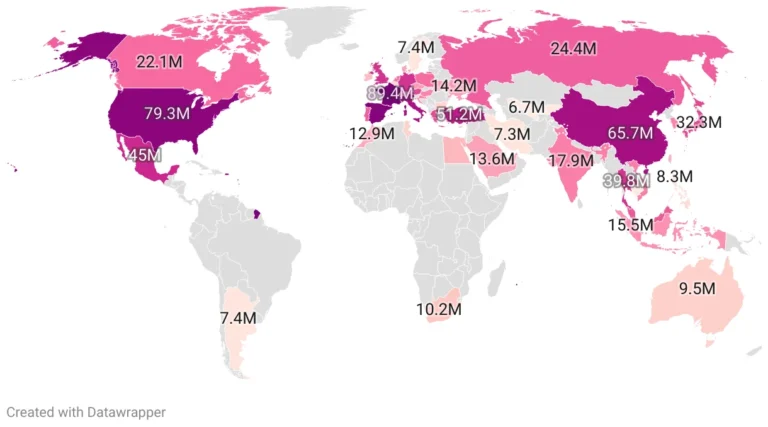
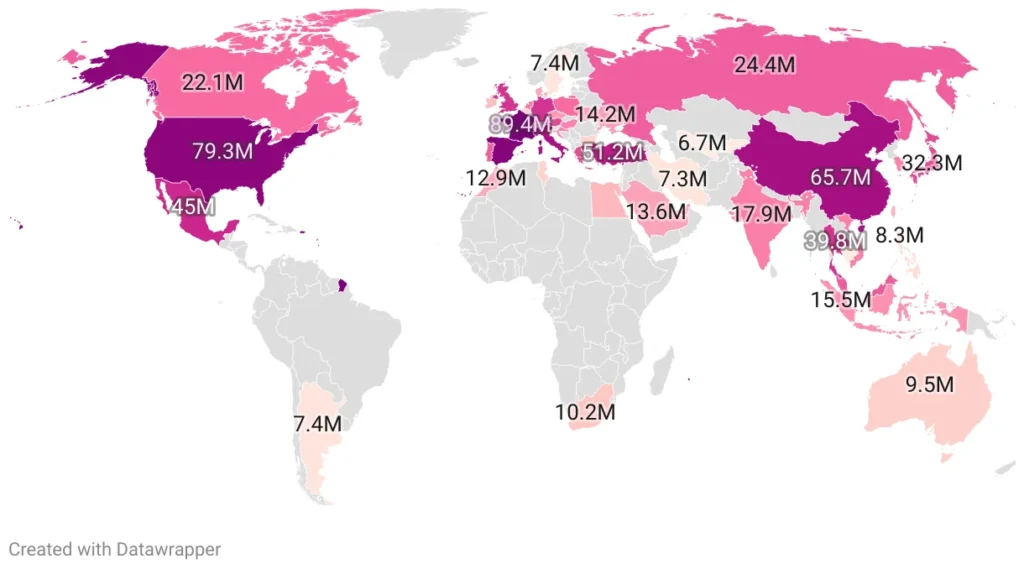
In North America, the United States and Mexico stand out with very high visitor numbers, joined by Canada with a solid, though smaller, tourism volume. The U.S. attracts visitors with globally recognizable cultural icons—New York’s skyline, Hollywood, jazz and blues traditions, and national parks that preserve vast natural landscapes—layered on top of a long history of immigration that has created diverse food and cultural scenes. Mexico blends pre‑Columbian heritage sites such as Teotihuacan and Chichen Itza with Spanish colonial architecture and coastal resorts; strong hospitality infrastructure, from all‑inclusive beach hotels to extensive air connections, converts that heritage into mass tourism. Canada leverages dramatic natural scenery, safe cities, and well‑organized parks, supported by efficient airports, good roads, and reliable accommodation chains that reassure visitors.
South America
South America shows moderate tourism numbers concentrated in a few key countries such as Brazil and Argentina. Brazil’s draw stems from a unique fusion of Afro‑Brazilian culture, Portuguese colonial history, and world‑famous events like Carnival, all set against icons such as Rio de Janeiro’s Christ the Redeemer and the Amazon rainforest. Argentina builds on European‑influenced cities like Buenos Aires, tango culture, and Patagonian landscapes, appealing to travelers seeking both urban sophistication and wild nature. Yet overall numbers remain lower than in Europe or North America partly because air links are longer and more expensive for many visitors and because tourism infrastructure—while improving—is less dense outside major hubs, limiting how many people the region can comfortably host at once.
Europe
Europe is the densest cluster of deep purple on the map, indicating the world’s highest concentration of tourist arrivals. This dominance reflects centuries of layered history: Roman ruins in Italy, Gothic cathedrals in France and Spain, Renaissance art in Italy, imperial capitals like London and Vienna, and painstakingly preserved old towns across the continent. Cultural assets—from cuisine and wine traditions to music, literature, and fashion—give each country a distinct identity that travelers can sample within short distances thanks to open borders within much of the region. Crucially, Europe has invested for decades in high‑quality hospitality infrastructure: dense rail networks, low‑cost airlines, walkable city centers, a wide range of hotels and guesthouses, and professional tourism services that make multi‑country trips easy to plan. Because transport is frequent and predictable and visitor information is available in many languages, historic monuments and museums convert efficiently into large visitor numbers.
Africa
Africa on this map shows only a few highlighted countries with substantial tourism volumes, notably South Africa and some North African states, while much of the continent appears in grey or pale shades. North African nations such as Egypt and Morocco possess extraordinary historical and cultural resources: Pharaonic temples and pyramids, Islamic architecture, ancient medinas, and desert landscapes that have fascinated travelers for centuries. South Africa offers a different mix—wildlife safaris, wine regions, and a complex political history that draws visitors to sites associated with the anti‑apartheid struggle. However, many African countries with rich cultures and heritage—traditional kingdoms, prehistoric sites, and diverse languages—see fewer tourists because of limited air connections, weaker marketing, political instability, or concerns about safety. Where governments and local entrepreneurs upgrade airports, roads, and accommodation options, and where they manage wildlife and heritage sites sustainably, tourist numbers tend to rise, showing how infrastructure can unlock cultural and natural attractions.
Asia
Asia’s map is dominated by deep shades in China, India, Japan, and a few Southeast Asian destinations, underlining the region’s growing tourism power. Thousands of years of history have left Asia with dense concentrations of temples, palaces, classical gardens, and historic trade cities—from Beijing’s Forbidden City and the Great Wall to Kyoto’s shrines, Angkor Wat in Cambodia, and the forts and palaces of Rajasthan. These sites are embedded in living cultures: food traditions, festivals, and religious practices that offer visitors immersive experiences very different from their home countries. In recent decades, many Asian governments have matched this cultural wealth with aggressive investment in hospitality infrastructure—modern airports, high‑speed rail, metro systems, and large hotel chains in cities such as Bangkok, Shanghai, and Tokyo—making travel more convenient. Popular beach destinations in Thailand, Indonesia, and elsewhere show how good resort planning, reliable services, and international branding can transform scenic coastlines into high‑volume tourism magnets.
Oceania
Oceania is represented chiefly by Australia, with a solid block of tourists compared to its small population, and by New Zealand with more modest but still notable numbers. European colonial history left both countries with English‑speaking institutions and cities that feel familiar to many visitors from North America and Europe, while Indigenous cultures—Aboriginal heritage in Australia and Māori traditions in New Zealand—add depth and distinctiveness to the cultural landscape. Natural assets such as the Great Barrier Reef, Uluru, and New Zealand’s dramatic alpine and coastal scenery underpin strong adventure and eco‑tourism sectors. Because these destinations are distant for most travelers, they depend heavily on efficient long‑haul airports, strict safety standards, and a reputational emphasis on high‑quality accommodation and organized tours; strong hospitality infrastructure compensates for distance by ensuring that once travelers arrive, their experience is smooth and comfortable.
Why history, culture, and infrastructure matter
Across continents, the map shows that high tourism numbers cluster where historical and cultural assets intersect with modern hospitality infrastructure. Countries rich in heritage—monuments, traditional arts, religious sites, and historic urban cores—create the original reason to visit; they offer narratives and experiences tourists cannot easily find elsewhere. Yet heritage alone is not enough: many places with remarkable history remain lightly visited because travelers fear logistical difficulties, poor safety standards, or unreliable services. When governments protect and interpret cultural sites, fund museums, and promote festivals while simultaneously improving airports, roads, public transport, and digital booking systems, visitor flows grow quickly. High‑quality hotels, hostels, and homestays, trained guides, multilingual signage, and clear online information lower the “friction” of travel, making it easier for global tourists to convert curiosity into an actual trip.
The map therefore can be read as a global scoreboard of how effectively countries have turned their historical and cultural capital into accessible experiences. Nations with deep cultural roots but weak infrastructure appear in lighter shades, signaling untapped potential. Those with both rich heritage and strong hospitality systems—many in Europe, North America, parts of Asia, and Oceania—stand out in dark colors because they have built entire economies around welcoming visitors.