


A Nation at the Heart of Europe
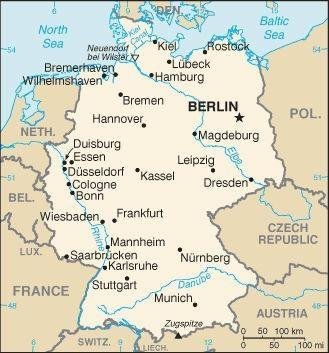
Germany stands as one of Europe’s most influential nations, a country whose tumultuous history and remarkable resilience have shaped not only its own destiny but that of the entire continent. Covering approximately 357,000 square kilometers in Central Europe, Germany is home to over 84 million people, making it the European Union’s most populous member state.
From Alpine Peaks to Baltic Shores
The German landscape is remarkably diverse, stretching from the wind-swept beaches of the North and Baltic Seas to the majestic Alps in the south. The country is divided into sixteen federal states, or Bundesländer, each with its own distinct character and traditions. The northern lowlands give way to the central uplands, where dense forests and rolling hills dominate, before rising to the dramatic mountain ranges of Bavaria. Major rivers like the Rhine, Danube, and Elbe have served as vital arteries of commerce and culture for centuries.
The Great War: When Europe Burned
When World War I erupted in 1914, Germany, alongside Austria-Hungary, formed the Central Powers against the Allied forces. The German military machine was formidable, employing innovative tactics and technologies including submarines, poison gas, and strategic railway mobilization. German forces initially advanced rapidly through Belgium and France, but the war devolved into brutal trench warfare. Despite impressive military capabilities—at one point fielding over thirteen million soldiers—Germany faced enemies on multiple fronts and suffered from Allied naval blockades that strangled its economy and left civilians starving.
The Versailles Curse: Seeds of Future Catastrophe
The war’s end in 1918 brought catastrophic consequences. The Treaty of Versailles imposed crushing reparations payments, stripped Germany of territory and colonies, limited its military to just 100,000 troops, and forced acceptance of sole responsibility for the war. The treaty’s humiliating terms and economic devastation created fertile ground for extremism. The Weimar Republic struggled with hyperinflation so severe that workers needed wheelbarrows to carry wages that became worthless within hours. Political instability, economic desperation, and wounded national pride created conditions that Adolf Hitler and the Nazi Party would ruthlessly exploit.
Humanity’s Darkest Hour
World War II represented humanity’s darkest chapter, with Germany at its horrific center. Hitler’s aggressive expansionism triggered the conflict in 1939, and the Wehrmacht initially dominated through Blitzkrieg tactics. The German war machine, rebuilt in violation of Versailles restrictions, was technologically sophisticated and tactically brilliant. However, the Holocaust—the systematic murder of six million Jews and millions of others—remains an unfathomable crime that forever stained German history.
Rising from the Rubble
By 1945, Germany lay in ruins. Cities were reduced to rubble, millions were dead, and the nation was occupied and divided by Allied powers. The Western zones merged to form the Federal Republic of Germany, while the Soviet zone became the communist German Democratic Republic. The Iron Curtain split families, and the Berlin Wall became the Cold War’s most potent symbol.
What followed represents one of history’s most remarkable recoveries. The Marshall Plan pumped billions into Western Germany’s reconstruction, but American aid alone cannot explain the “Wirtschaftswunder”—the economic miracle. German engineering expertise, work ethic, and educational systems proved invaluable. Companies that survived the war, along with new enterprises, rebuilt with modern equipment and fresh determination. By the 1960s, West Germany had become Europe’s economic powerhouse.
Luther’s Legacy: A Divided Faith United
Religion in Germany reflects both historical divisions and modern secularization. The Protestant Reformation began here when Martin Luther nailed his ninety-five theses to a church door in Wittenberg in 1517, splitting German territories between Catholic and Protestant states for centuries. Today, roughly equal numbers identify as Catholic or Protestant, though church attendance has declined significantly. Germany is also home to Europe’s second-largest Muslim population, reflecting decades of immigration.
Europe’s Economic Powerhouse
The German economy, with a GDP exceeding four trillion dollars, ranks as Europe’s largest and the world’s fourth largest. While Germany lacks abundant oil or gas reserves, it possesses significant deposits of coal, lignite, and potash. However, the nation’s true resource has always been its people—highly educated, skilled, and industrious. The country has increasingly invested in renewable energy, leading Europe’s transition toward sustainable power generation.
Where Football is Religion
Football reigns supreme among German sports, with the Bundesliga attracting passionate fans and the national team having won four World Cup titles. Winter sports thrive in Alpine regions, while handball, basketball, and motorsports also command significant followings. German athletes have consistently excelled at Olympic competitions, reflecting the country’s strong sports infrastructure and emphasis on physical education.
The Automotive Empire
Germany’s engineering prowess became legendary, particularly in automotive manufacturing. The German obsession with cars transcends mere transportation—it represents engineering philosophy itself. Brands like Mercedes-Benz, BMW, Volkswagen, Porsche, and Audi became synonymous with precision engineering, performance, and quality. The Autobahn system, with stretches having no speed limits, reflects confidence in both German engineering and driver discipline. German automotive companies didn’t just manufacture vehicles; they engineered experiences, pushing boundaries in safety, efficiency, and performance.
This automotive obsession stems from multiple factors: Germany’s strong apprenticeship system that trains master craftsmen, research universities producing world-class engineers, and a cultural appreciation for mechanical excellence. The country’s “Mittelstand”—medium-sized family businesses—became hidden champions, producing specialized components and machinery that made Germany indispensable to global manufacturing.
A Reunited Nation Looking Forward
Reunification in 1990, following the Berlin Wall’s fall, presented enormous challenges as West Germany absorbed a collapsed East German economy. Yet Germany persevered, investing trillions in modernizing eastern infrastructure while maintaining its position as an export powerhouse.
Conclusion
Today, Germany faces new challenges: an aging population, integration of immigrants, energy transition away from nuclear power and fossil fuels, and questions about its role in European leadership. Its military, the Bundeswehr, remains relatively modest with approximately 180,000 active personnel, reflecting post-war constitutional restrictions and a population deeply skeptical of militarism.